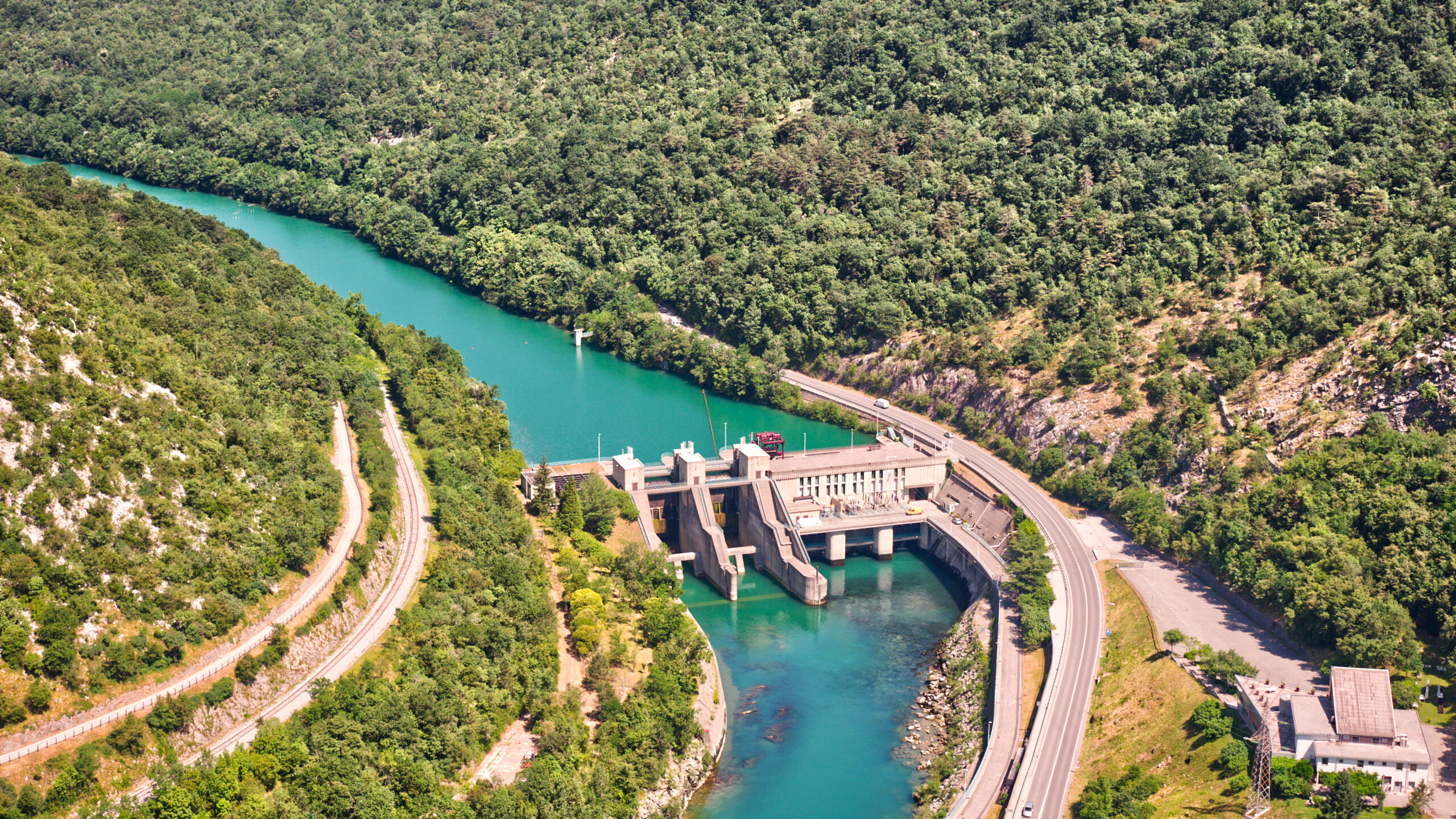







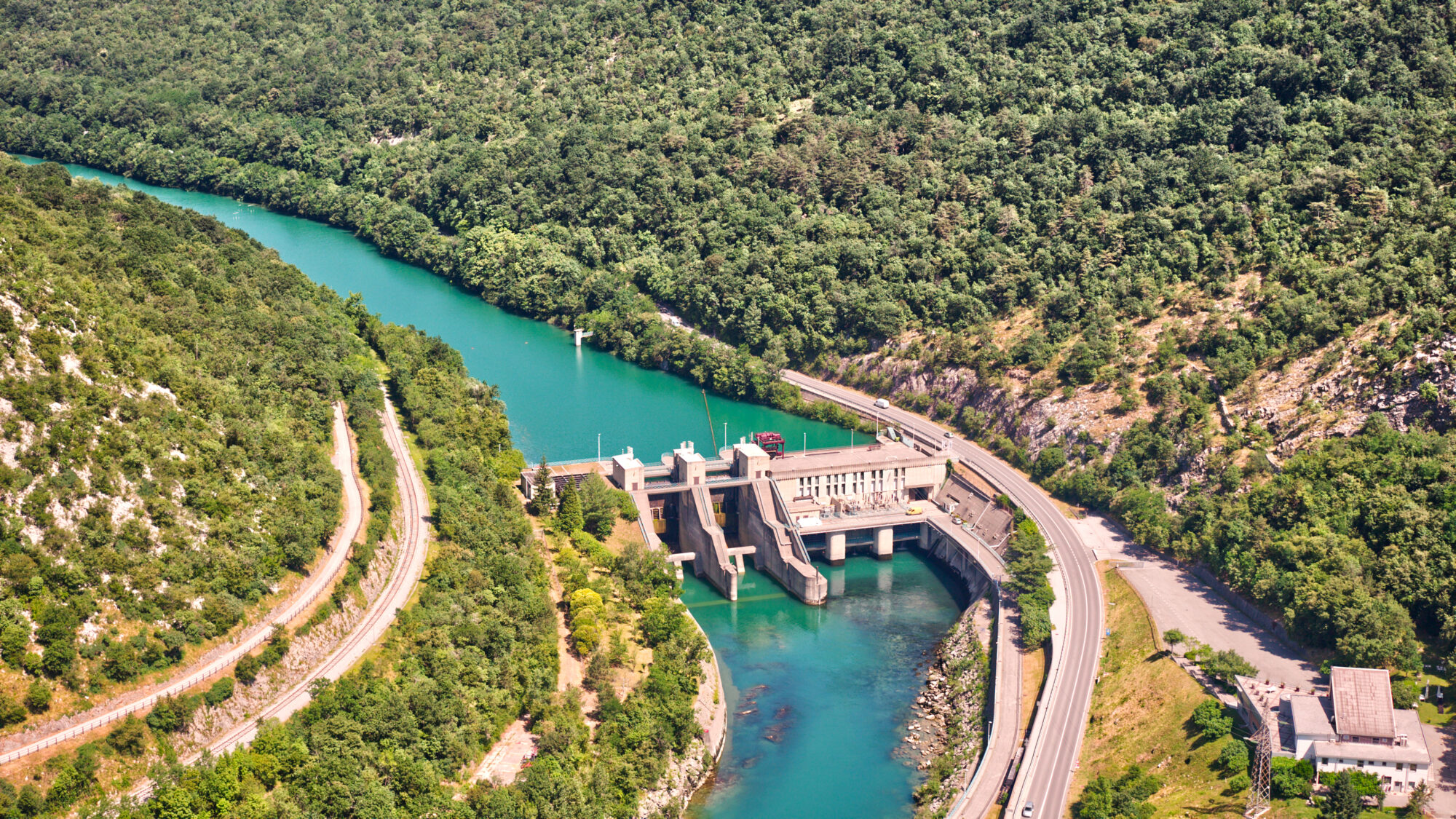
(Ljubljana, 22 March 2026) – The HSE Group and its production companies – Dravske Elektrarne Maribor (DEM), Soške Elektrarne Nova Gorica and Hidroelektrarne na Spodnji Savi (in which HSE holds a 49% stake) – are the biggest producers of electricity from Slovenian rivers. Our hydroelectric power plants on the Drava, Soča and Sava rivers produced an average 3,325 GWh of electricity in the last five years, more than 33% of all electricity produced in Slovenia and more than 67% of all electricity produced from renewable energy sources. Through responsible and systematic management of water systems and energy infrastructure, which includes regular maintenance and upgrades of existing hydroelectric power plants, we are making a significant contribution to enhancing the resilience of Slovenia’s energy sector and that of the country as a whole. This reduces our dependence on the reliability of supplies and the unpredictable prices of gas and oil, which is of particular importance in light of recent global events.
Companies within the HSE Group are in an intensive investment cycle driven by European and national strategies for the transition to renewable energy sources, decarbonisation goals, and strengthening resilience in the water sector. In its new strategy for water resilience, the European Commission emphasises, among other things, that Europe must strengthen integrated water resource management, increase investment in water infrastructure, accelerate digitalisation and the use of advanced technologies, and enhance preparedness for droughts and floods.
Thus, at the heart of the HSE Group’s development plans is accelerated investment in renewable energy sources, with the energy potential of Slovenian rivers playing a significant role. Water is one of the most sustainable forms of electricity generation, and the HSE Group’s hydroelectric power plants are designed and operated in accordance with the latest environmental standards. The companies DEM, SENG, and HESS (in which HSE holds a 49% share) consistently adhere to environmental protection requirements and the principles of sustainable development in the construction and energy utilisation of the Drava, Soča, and Sava rivers. Their impact on ecosystems is minimal, as they consistently ensure suitable habitats and well-maintained passages for aquatic organisms, bird islands, wetlands and aquatic habitats. In addition, they regularly maintain the energy infrastructure of the power plants as well as the banks of rivers and canals, thus ensuring flood safety. The construction of hydroelectric power plants also offers numerous opportunities for the development of tourism, fishing, recreation and other forms of leisure activities.
The largest energy project in Slovenia in hydroelectric power generation, which is being carried out under the auspices of HSE, is the construction of hydro power plants on the middle Sava River. Currently, the siting of the lower three hydro power plants – namely the Suhadol, Trbovlje and Renke plants – is underway as part of the national spatial planning process, specifically on the section of the Sava River between Litija and Zidani Most. The project is in the phase of obtaining opinions from national spatial planning institutions on the study of alternatives, the environmental report, and the draft regulation on the most appropriate alternative. The first three hydroelectric power plants on the middle Sava River will have a planned total installed capacity of 101 MW, and an estimated annual production of 403 GWh, which is sufficient to supply 100,000 average households. The chain of hydro power plants on the middle Sava River is a significant, multi-purpose national project that contributes significantly to the transformation of the Zasavje region’s energy sector and to increasing Slovenia’s energy self-sufficiency.
Numerous opportunities also arise in simultaneous exploitation of water and riparian surfaces for the generation of electricity. A 2.5 MW solar power plant is operating on the banks of HPP Zlatoličje, and the planned potential of solar power plants on the embankments of HPP Formin and HPP Zlatoličje is as much as 24.5 MW. At the site of the upper reservoir of the Avče pumped-storage hydro power plant in Kanalski Vrh, SENG plans to construct the second phase of the Kanalski Vrh solar power plant, which will have a total capacity of 7.3 MW and an expected annual electricity production of 8 GWh. HSE plans the installation of the first floating photovoltaic power plant in Slovenia on Lake Družmirje in Šoštanj. The power plant will take up no more than half of the lake surface and its installed capacity will be up to 130 MW. The floating solar power plant is planned in such a way as to preserve the ecological and chemical status of Lake Družmirje, while also taking into account the ecological requirements of fish, birds and other animal species. The floating solar power plant will not cause harmful emissions, and access to the water will be enabled along the entire shore of the lake. Simultaneously with the installation of the floating solar power plant, the surrounding area of the lake will be developed for the purposes of tourism, sport and recreation.
As the proportion of renewable energy sources for electricity generation increases, the volatility of electricity generation also increases. Pumped-storage hydroelectric power plants are the most widespread, largest and most reliable electricity storage technology in Europe and play an important role in several countries in providing system services and balancing both consumption and production of electricity from renewable energy sources. Within the HSE Group, under the auspices of Soške elektrarne Nova Gorica, the Avče pumped-storage hydroelectric power plant is already in operation, while the second planned facility is the Kozjak pumped-storage hydroelectric power plant, which is currently in the phase of preparing technical documentation and solutions as part of the process to obtain a comprehensive construction permit. The Kozjak pumped-storage hydroelectric power plant is of strategic importance for the country and its energy sector and as such is included in the strategic documents of DEM, the HSE Group, as well as the grid operator ELES and the NECP.
HSE Public Relations and Marketing Communications